
I have spent twenty six years in this industry and the thing that still frustrates me more than almost anything else is how many golf clubs have never properly worked out what a good PGA professional is actually worth to them. They know he is there. They know he has a shop and they know members go and see him when something is wrong with the slice or the putter or the driver that suddenly stopped working. Beyond that the relationship is often quite thin and the pro ends up being treated as a tenant rather than as one of the most valuable people at the club.
Now I want to be honest about this because it cuts both ways. Like every profession there are levels to it. I have worked alongside some outstanding PGA professionals who transformed the atmosphere of a club and who could tell you the name of every junior, every new member and every visitor who walked through the door. I have also come across some very average ones who did the bare minimum and sat behind a counter waiting for somebody to interrupt them. That is not a golf problem. You get that spread in every single industry and anybody who tells you otherwise has not worked in many of them.
What I would say is that when you get an engaged proactive PGA professional at a golf club the opportunity to enhance the customer experience becomes genuinely measurable. Retention goes up because people who take lessons stay members. Spend goes up because people who get fitted properly buy properly. Junior sections grow because somebody is actually out there running them rather than hoping they run themselves. The strange thing is that the industry keeps designing operating models that make it harder and harder for that person to do any of it.
That brings me to something we are currently working on inside Link Club which I think is going to change the role of the club professional quite significantly.
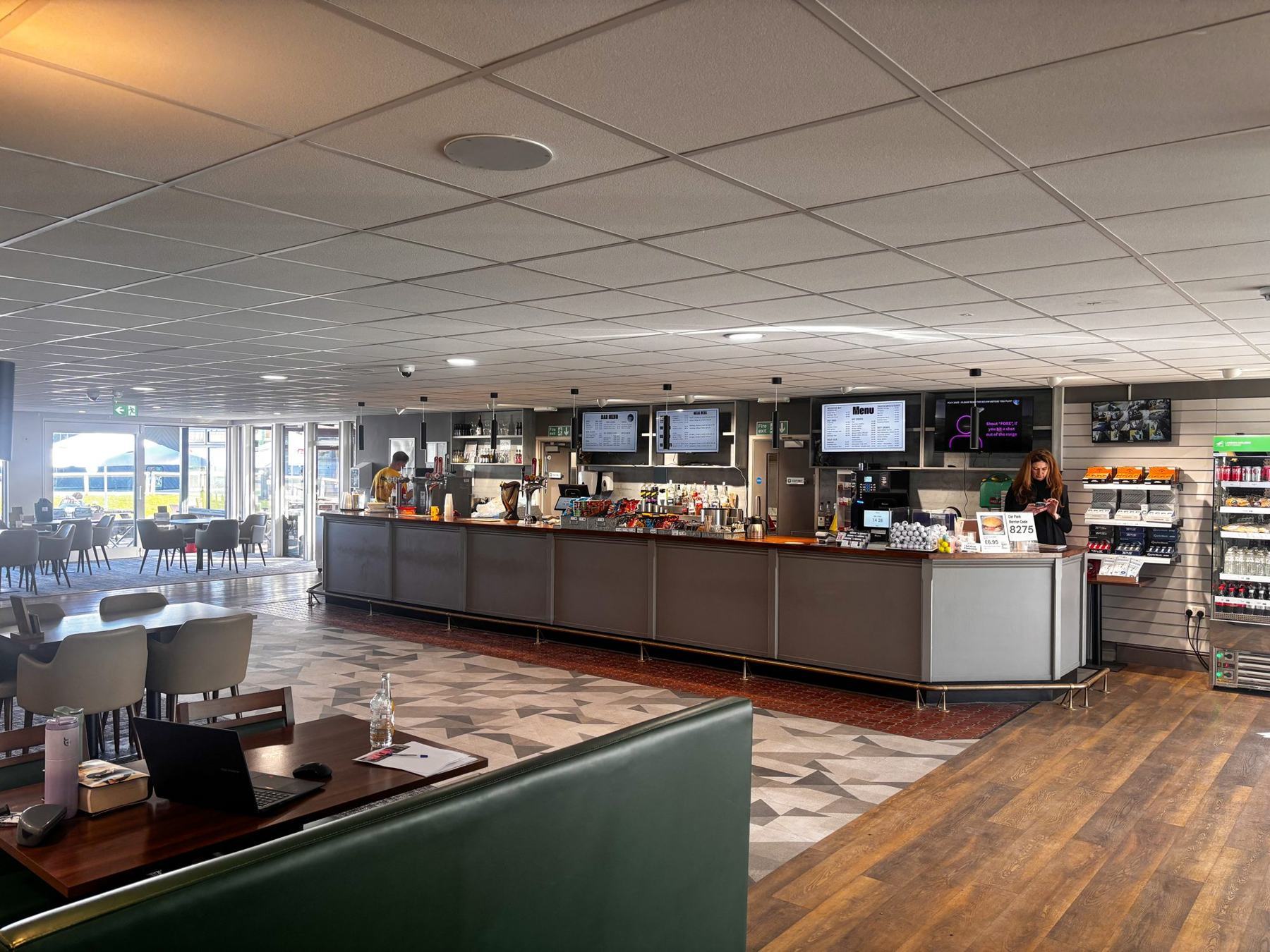
One of the fundamental operating principles at Link Golf is the central hub. Rather than scattering a golfer across three or four different buildings and counters we want one location where they check in for golf, order their food and drink, buy what they need and sit with their mates afterwards. Everything from one place with one team and one experience. We think this is the answer to a problem that has been creeping up on this industry for years which is the car park golfer.
You know exactly who I mean because you have watched him. He arrives twenty minutes before his tee time with his shoes already on. He plays his round, he walks straight back to the boot of his car and he drives home. He is not being rude and he is not being tight. He is short on time, he has a family or a shift or a school run waiting for him and he cannot justify sitting in a clubhouse for forty minutes waiting on a food order that may or may not turn up. Every club I speak to has more of these golfers than they did five years ago.
Our response is to pull that golfer back in by making it effortless. Grab and go options that take thirty seconds. A loyalty scheme that actually gives him a reason to spend with us rather than the drive through on the ring road. Get all of that into one central hub with a team who know his name and suddenly the man who has not sat in a clubhouse for two years is having a coffee and a bacon barm before his round.
Here is where it gets complicated and here is where I need to be straight about the friction. If you build a central hub and you tell every golfer that this is the place to come before and after their round then a separate pro shop sitting fifty yards away starts to work against you. Worse than that, if the pro is selling coffee and chocolate and cans of pop while we are trying to sell coffee and chocolate and cans of pop then you have two operations competing over a two pound margin while the member stands in the middle wondering where he is supposed to go. I have seen this exact tension play out at a number of clubs over the years and I have seen it handled really poorly, usually by somebody deciding to win the argument rather than by somebody deciding to fix the model.
So what we are proposing is this. We take the pro’s consumable items and we put them in the central hub. His golf balls, his tees, his gloves, his hats, his accessories. Our team sells that stock on his behalf during every hour we are open and we take zero commission on any of it. Not a reduced rate. Nothing. The money goes to the pro because it is his stock and his business, we simply have the footfall and the staff and the till already sitting there.
At the same time we want to invest in the space he is currently using as a shop. We are looking at projects to convert existing pro shops into state of the art swing rooms and fitting centres so that instead of a tired retail unit full of slow moving stock he has an indoor simulator, proper launch monitor technology and a fitting environment that members are genuinely excited to book into. He focuses on lessons, custom fitting and high value retail where his expertise is the entire reason the sale happens. We take care of selling the things that do not need a PGA qualification to sell.
I feel strongly about this because I lived it. I built a successful teaching business and I still remember the maths never quite working the way it should have done. Every time I went out to give a lesson or ran a fitting session I was paying somebody to stand in the shop so it could stay open, which meant the lesson income was being eaten before I had even walked back in. Staffing a pro shop for twelve hours a day while trying to teach for six of them is a brutal way to run a business and there are hundreds of pros around the country doing it right now and quietly wondering why they work so hard for what lands at the bottom.
Our model removes that burden entirely. The pro no longer carries the cost of manning a counter for the hours when nobody is buying anything, he no longer has capital tied up in a building that is open whether or not it is earning and he can spend his day doing the work he actually trained for. On top of that we still pay him a retainer for his services at the club because we believe a PGA professional is a significant positive for the members and we want him properly rewarded for being there rather than tolerated as an occupant.
I want to be clear that none of this is about reducing the role of the professional. It is the opposite. A PGA professional is not needed when somebody is buying a packet of tees or a hat or a can of Coke. He is absolutely needed when a member has been fighting the same fault for three years, when a fourteen year old is deciding whether golf is her sport and when somebody is about to spend six hundred pounds on irons they will use for a decade. We want his expertise pointed at the things that create real value and we are happy to sell his consumables for him for nothing while he does it.
We are genuinely excited about this as we roll out Link Club and we are still shaping the detail, which is exactly why I am putting it out here rather than announcing it as finished. If you are a PGA professional I would really like to know what you make of it. Tell me where you think it works, tell me where you think it falls over and tell me what you would want protecting if somebody offered you this at your club tomorrow. I would rather hear it now than after we have built it.